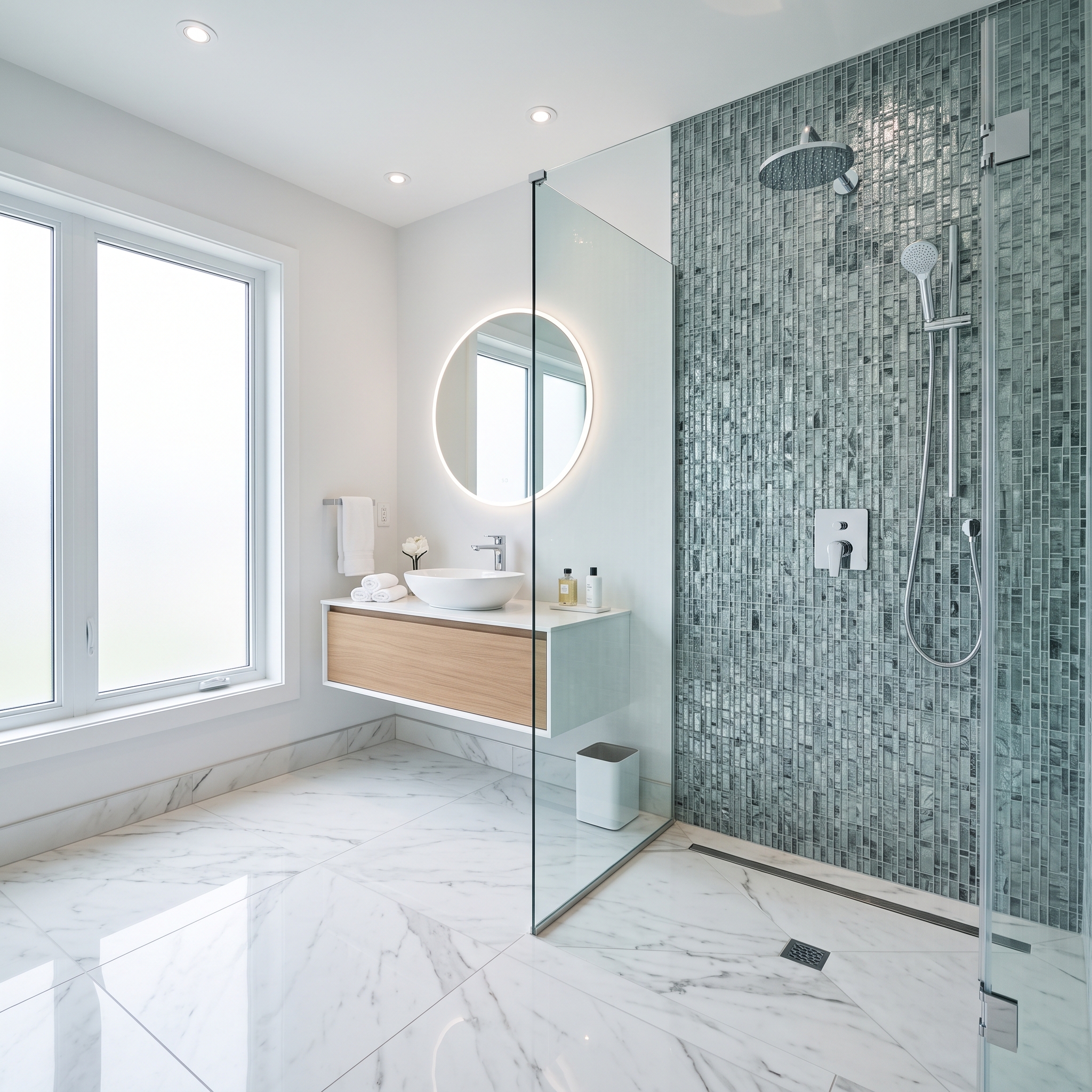
Choosing the right tile for your bathroom in Harrisburg, PA requires matching specific material properties to the demands of each zone in the room. The tile that looks stunning on a showroom wall may be unsafe on a wet shower floor, and the large format slab that creates a seamless spa-like look on walls requires entirely different sizing logic when applied underfoot. Getting this right from the start means a bathroom that is beautiful, safe, and easy to maintain for decades. Getting it wrong means cracked grout, slippery surfaces, or moisture damage behind walls that reveals itself years later. This guide covers every decision in the sequence that makes it manageable.
Understand the Different Zones in Your Bathroom First
The bathroom is not a single environment. It is several distinct zones with different moisture levels, foot traffic demands, and safety requirements. The tile that is right for one zone may be entirely wrong for another, which is why bathroom tile selection starts with understanding what each surface needs before any material is chosen.
Shower floors see the most direct water exposure of any surface in the home and require the highest slip resistance rating, the most grout joints for traction and drainage, and a tile verified for wet shower floor use specifically. Shower walls handle constant moisture and steam but do not require the same slip resistance as floors, which means larger, smoother tiles that are harder to keep clean on a floor can work beautifully on a shower wall.
Bathroom floors outside the shower see regular water exposure from splashing, wet feet, and condensation. They need good slip resistance but not the same level as shower floors, and they can carry larger format tile than a shower floor can safely accommodate. Bathroom walls are the driest zone and offer the most flexibility in tile choice, size, and finish.
Working through each zone with these distinctions in mind produces a bathroom where every tile choice is matched to what that surface actually needs rather than applied uniformly across a room that has fundamentally different demands in different areas.
Slip Resistance: The Most Important Safety Factor
According to the CDC, more than one in four older adults falls each year, making bathroom flooring choices especially important in homes designed for long-term comfort and accessibility. Slip resistance is not a secondary consideration in bathroom tile selection. It is the primary safety factor, and it is measured by a specific industry standard that every homeowner choosing bathroom tile should understand.
The Dynamic Coefficient of Friction, known as DCOF, is the primary slip resistance measure used by the North American tile industry. It measures how well a tile grips under wet conditions. ANSI A137.1 requires tile flooring products to have a DCOF of 0.42 or greater if recommended for use in a level interior space intended to be walked upon when wet. This is the minimum standard for any bathroom floor tile.
For shower floors, the threshold is higher. When opting for larger porcelain tiles in a shower, select ones with at least an R10 slip rating or higher to ensure proper grip on wet surfaces. R10 is the minimum recommended for residential showers where moisture is a constant factor.
Polished and semi-polished surfaces create a very smooth surface. Daltile does not recommend polished surfaces in any areas that may be subjected to water, oil, or grease exposure. This is a practical rule that eliminates a significant category of tiles from bathroom floor consideration regardless of how attractive they look in a showroom.
Matte tiles are one of the best options for bathroom floors. They provide a natural level of grip and reduce the risk of slipping. A matte or textured finish on a tile with a DCOF of 0.42 or higher is the baseline combination for a safe bathroom floor tile in Harrisburg and anywhere in Central Pennsylvania.
Tile Material: Matching the Right Material to Each Zone
Material choice affects water absorption, durability, maintenance requirements, and long-term performance in a bathroom environment. Each main category has specific strengths and limitations that determine where it belongs.
Porcelain
Porcelain is the most reliably appropriate choice for bathroom floors and wet areas. Its water absorption rate of less than or equal to 0.5 percent, classified as impervious under ASTM testing standards, makes it highly resistant to moisture penetration, staining, and the freeze and thaw cycles that Central Pennsylvania’s winters create in any tile near exterior walls. Porcelain is available in virtually every finish and format, it carries PEI durability ratings suitable for high-traffic residential floors, and it does not require sealing.
For bathrooms, porcelain in a matte or textured finish with a verified DCOF rating is the most versatile and lowest-maintenance choice across floors, shower floors, and shower walls.
Ceramic
Ceramic tiles are appropriate for bathroom walls and lower-traffic floor areas where moisture exposure is less intense. Ceramic absorbs more water than porcelain and is generally softer, making it less durable under heavy foot traffic or in direct shower floor applications. On bathroom walls and backsplash areas, ceramic offers excellent design variety at a lower cost than porcelain and performs well.
Natural Stone
Natural stone including marble, travertine, and slate brings a level of visual luxury that porcelain can approximate but not fully replicate. The tradeoff is maintenance. Natural stone tiles typically need resealing every one to two years, while porcelain and ceramic tiles generally do not require sealing unless the grout lines are being treated as a separate maintenance task.
Marble and travertine are relatively porous compared to porcelain and require consistent sealing to prevent moisture penetration, staining, and etching from acidic products. For homeowners who want natural stone in a bathroom, working with an installer who has specific experience with stone in wet environments is essential. Improper waterproofing behind stone tile on shower walls leads to moisture damage that is both expensive and disruptive to repair.
Honed and tumbled stone finishes provide better slip resistance than polished stone on bathroom floors. Polished marble floors in wet areas are a safety concern regardless of how they appear in design publications.
Glass Tile
Glass tiles are completely waterproof and reflect light beautifully. They are not suitable for floors due to slip concerns but create stunning visual effects in wet areas. Glass tile is an excellent choice for shower wall accents, backsplash applications, and decorative borders where its light-reflective qualities enhance a space without the slip risk it would present on a floor surface.
Tile Craft Artisans specializes in luxury tile installation across Harrisburg, PA and surrounding Dauphin County and Central Pennsylvania communities, working with marble, porcelain, ceramic, travertine, Nero Marquina, Calacatta Gold, glass mosaic, and wood-look porcelain across bathroom floors, shower walls and floors, backsplashes, and feature walls.
Tile Size: Different Logic for Floors and Walls
Size is not a one-answer question because walls and floors require opposite things. On shower and bathroom walls, large-format tile shines. Bigger tiles mean fewer grout lines, which means less grout to seal and less grout to scrub, and walls do not need the underfoot traction that floors do. On a shower floor, the logic flips.
For shower floors specifically, smaller sizes allow for more drainage through an increased number of grout joints and easier sloping. Planar variations on larger formats could result in a higher probability of standing water and increase the risk for hydroplaning. Mosaic tiles, typically one to four inches, are the most commonly specified option for shower floors for this reason. Their small format creates more grout lines that add traction, and they follow the required floor pitch toward the drain more easily than large format tiles can.
For bathroom walls and main bathroom floors outside the shower, larger formats produce a cleaner, more seamless appearance with fewer grout lines to maintain. Large-format tiles between 12 by 24 and 24 by 24 inches create fewer grout lines for a seamless, spacious look and are best in medium to large bathrooms.
Room proportion matters as well. A very small bathroom tiled in large format can feel visually crowded and out of scale. A tiny bathroom can feel crowded with large-format tiles, while large bathrooms can look disjointed with very small mosaics. Matching tile size to the actual measured dimensions of the room produces results that feel intentional rather than arbitrary.
Finish: Matching the Surface to the Application
Tile finish determines both how a surface looks and how it performs in wet conditions. The finish choice for a bathroom floor is not a matter of preference alone. It is a safety and maintenance decision.
Matte finishes have low sheen, provide excellent traction, and hide water spots and fingerprints. They are the recommended choice for bathroom floors and shower floors. Textured finishes add surface variation that improves grip in wet areas and are particularly appropriate for shower floors. Polished and glossy finishes are reflective, bright, and visually dramatic on walls, but they are not recommended for any wet floor application.
A practical approach for most bathrooms in Harrisburg and across Central Pennsylvania is to use a matte or textured finish on all floor surfaces and a polished or satin finish on walls where the reflective quality adds light and visual depth without the safety concern that it would create underfoot.
Grout Selection and Joint Width
Grout is not an afterthought in bathroom tile design. It affects the appearance, maintenance requirements, and slip resistance of the finished installation.
Grout is not a substitute for picking the right tile to begin with. It works alongside tile size, finish, installation quality, and the right grout selection to build a flooring system that actually fits the space.
Epoxy grout resists moisture, staining, and mildew without the same sealing requirements as cement-based grout and is particularly well suited to bathroom floors and shower applications where regular water exposure would otherwise require frequent sealing. Cement-based grout performs well but benefits from sealing in wet areas to prevent moisture and mildew from settling into the porous material over time.
Grout color affects both maintenance and appearance. Mid-tone grout that is close to the tile color conceals everyday dirt and moisture variation in high-traffic bathroom areas. Very light grout in a shower floor requires more maintenance to keep clean. Very dark grout against light tile creates a strong visual grid that emphasizes grout lines, which may or may not suit the design intent.
Joint width affects visual rhythm and slip resistance. Wider joints between tiles produce more grout surface area and add traction on floor applications. Narrower joints on walls create a more seamless appearance.
How to Plan Your Bathroom Tile Selection in Practice
The decisions above are most useful when applied in a specific sequence rather than approached simultaneously.
Start with the floor materials and slip ratings. Confirm DCOF for bathroom floors and shower floor separately. Then select the finish, confirming matte or textured for all floor applications. Then determine size based on the actual room dimensions and whether large format or small format better suits each zone. Then select wall tile, which offers more flexibility in finish and size than floors do. Then choose grout by type, color, and joint width, making sure the grout selection suits the maintenance commitment you want to make.
Request physical samples for every material you are considering and evaluate them under your actual bathroom lighting conditions before committing. Always test samples under your actual lighting. Use light colors for small bathrooms, darker tones for spacious ones. Showroom lighting is almost always different from residential lighting, and a tile that reads warm and inviting under bright commercial lighting may read cold or flat under a bathroom vanity fixture.
The gallery at Tile Craft Artisans shows completed bathroom tile installations across a range of materials and applications, giving Harrisburg homeowners a clear picture of how these choices translate into finished results before the first tile is ordered.
Final Thoughts
Choosing the right bathroom tile in Harrisburg, PA involves a sequence of decisions that starts with understanding what each zone of the bathroom actually requires, not what looks best in isolation. Slip resistance ratings, water absorption, finish by application, size matched to room scale and zone function, and grout selection that suits the maintenance reality of a wet environment all work together to produce a bathroom that performs safely and looks exceptional for decades.
The existing site post on comparing tile materials covers eight material types across all applications. This post focuses entirely on bathroom-specific selection logic, which requires a different framework than general material comparison. DCOF ratings, zone-by-zone sizing logic, and finish-by-application decisions are all bathroom-specific considerations that determine whether a tile installation is safe and durable or simply attractive.
To discuss your bathroom tile selection with an installation team serving Harrisburg, Lykens, Dauphin County, and surrounding Central Pennsylvania communities, contact Tile Craft Artisans at 717-275-5648 for a free consultation.

Questions to Ask a Tile Installer in Harrisburg PA
Signs Your Grout Needs to Be Repaired or Replaced in Harrisburg PA