A professional tile installation in Harrisburg PA typically moves through five stages: an initial consultation and measurement, tile selection and layout planning, surface preparation, the actual tile setting, and a final walkthrough after grouting. Most small bathroom projects take about 2 to 3 working days on site, while a full bathroom remodel with a custom shower can take 7 to 10 working days once you include cure time between steps. Knowing what happens at each stage, and how long the tile needs to cure before you can walk on it or move furniture back in, helps you plan around the project instead of being surprised by it. Here’s a full walkthrough of what to expect from the first phone call to the day you get your space back.
What Happens During Your Initial Consultation
Every tile project starts with a consultation, whether it happens in your home or in a showroom. During this step, your installer measures the space, discusses your goals, and reviews tile options that fit both your style and how the room gets used.
This is also when material choice gets locked in. Porcelain, ceramic, natural stone, and glass mosaic all behave differently during installation, so your installer will factor that into the plan. Wet areas like showers need moisture resistant materials and proper waterproofing, while a backsplash or accent wall has more design flexibility.
Expect to also talk through:
- Tile size and pattern, since large format tiles and intricate layouts affect labor time
- Grout color and width, which changes the final look more than people expect
- Timeline and scheduling, including how the project fits around other renovation work
- Budget, so the plan matches what you’re comfortable spending
How Is Your Space Prepared Before Tile Goes Down
Surface preparation is where a lasting installation is won or lost. Even premium tile will fail early if it’s set on an unstable or uneven base.
If old flooring is present, it gets removed first. Your installer then checks the subfloor for level and stability, since gaps or unevenness underneath will telegraph through the tile over time. In wet areas like showers and tub surrounds, a waterproofing membrane goes down before any tile touches the surface. Skipping this step is one of the most common causes of water damage behind tile walls.
For larger rooms or natural stone installations, your installer may also do a dry layout first, arranging tiles in place without adhesive to check the pattern and color variation before anything is permanently set.
What Happens on Installation Day
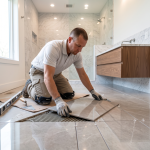
Once prep work is done, the actual tile setting begins. Thinset mortar gets spread with a trowel, tiles get placed and leveled, and spacers keep grout lines consistent. For natural stone or patterned layouts, installers work in small sections to keep the design accurate as they go.
This stage is the most visible part of the project, but it depends entirely on the prep work being done correctly. A rushed substrate or skipped waterproofing step will show up later, even if the tile looks perfect on day one.
Expect some noise and dust during this phase, especially if tile needs to be cut on site. Clearing the work area ahead of time and keeping pets away from the space makes the day go more smoothly for everyone.
How Long Does a Tile Installation Take
Timelines vary by project size and complexity, but here’s a general range based on common residential projects.
| Project Type | Typical Timeline |
|---|---|
| Kitchen backsplash | 1 to 2 working days |
| Small bathroom floor | 2 to 3 working days |
| Large kitchen floor | 3 to 4 working days |
| Full bathroom remodel with shower | 7 to 10 working days |
These numbers reflect working days on site and don’t include the curing time needed after grouting, which adds a few more days before the space is back to full use. Complex patterns, extensive substrate repair, or natural stone with heavy veining can extend any of these timelines.
How Long Do You Need to Wait Before Walking on New Tile
This is one of the most common questions homeowners have, and the answer depends on the materials used. For standard cement based thinset, light foot traffic is generally safe after 24 hours, but full strength takes closer to 7 days, so heavy furniture and appliances should stay off the floor until then.
Grout follows a similar pattern. Most grout is safe for light foot traffic within 24 hours, but high traffic areas should wait 48 to 72 hours. Sealing grout typically happens after 48 to 72 hours as well, once it’s fully cured.
Cooler temperatures and higher humidity slow this process down, so your installer may recommend a longer wait during certain seasons. It’s worth asking directly what timeline applies to your specific project rather than assuming a standard number, since tile size, adhesive type, and room conditions all play a role.
What Happens During the Final Walkthrough
Once grouting is complete and the tile has had time to set, your installer will walk the space with you to check the finished work. This is the time to point out anything that concerns you, whether it’s a grout line, a tile edge, or a spot that doesn’t look quite right.
A good final walkthrough also covers care instructions specific to your tile. Natural stone often needs periodic sealing, while porcelain and ceramic need very little upkeep beyond regular cleaning. Your installer should tell you what to expect long term, not just how the space looks the day the crew leaves.
Final Thoughts
A tile installation moves through a clear sequence: consultation, preparation, setting, and a final walkthrough, with curing time built in between the key steps. Knowing what happens at each stage, and how long you’ll need to stay off the tile before returning to normal use, makes the whole process easier to plan around.
If you’re getting ready for a tile project in the Harrisburg area, Tile Craft Artisans walks every client through this process personally, from the first consultation to the final walkthrough. Take a look at our tile installation services, browse our project gallery to see finished work, or contact us to schedule your consultation.
How Much Does Tile Installation Cost in Harrisburg PA
Questions to Ask a Tile Installer in Harrisburg PA